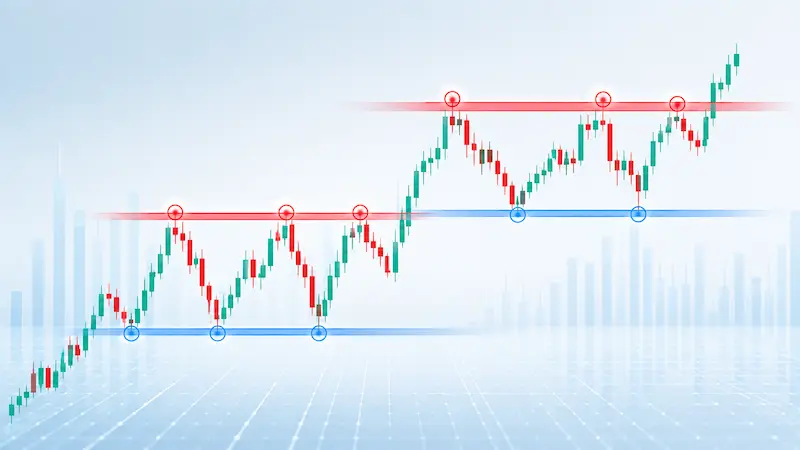
What Are Forex Trading Sessions?
Unlike stock exchanges, the foreign exchange market has no single physical location. Trading follows the sun around the globe through four major financial centres: Sydney, Tokyo, London, and New York. As one centre closes, another opens — which is why forex trades continuously from Sunday 22:00 UTC to Friday 22:00 UTC.
Each trading session has its own character. The Sydney and Tokyo sessions (together known as the Asian session) tend to be quieter, with narrower ranges and lower liquidity. The London session is the largest by volume, handling roughly 38% of all forex transactions. The New York session brings US economic data releases and deep dollar liquidity.
Understanding market hours matters because spreads, liquidity, and volatility change dramatically throughout the day. A strategy that works during the London–New York overlap may perform poorly in the thin liquidity of the late New York afternoon.
Forex Session Times (UTC & EST)
| Session | UTC Hours | EST Hours | Volume Share | Most Active Pairs |
|---|---|---|---|---|
| Sydney | 22:00 – 07:00 | 5:00 pm – 2:00 am | ~4% | AUD/USD, NZD/USD, AUD/JPY |
| Tokyo | 00:00 – 09:00 | 7:00 pm – 4:00 am | ~6% | USD/JPY, EUR/JPY, AUD/JPY |
| London | 08:00 – 17:00 | 3:00 am – 12:00 pm | ~38% | EUR/USD, GBP/USD, EUR/GBP |
| New York | 13:00 – 22:00 | 8:00 am – 5:00 pm | ~17% | EUR/USD, USD/CAD, USD/JPY |
Session times shift by one hour when regions enter or exit daylight saving time. Volume shares are approximate, based on BIS Triennial Survey data.
Session Overlaps — The Best Time to Trade Forex
London–New York overlap (13:00–17:00 UTC): This four-hour window is the most liquid period in the entire forex market, with more than half of daily volume flowing while both centres are active. Spreads on major pairs like EUR/USD reach their tightest, and most significant intraday moves happen here — particularly around US data releases at 13:30 UTC.
Tokyo–London overlap (08:00–09:00 UTC): A shorter, one-hour window where Asian liquidity hands over to Europe. It often sets the tone for the London session, and breakouts from the Asian range frequently occur in this window.
Sydney–Tokyo overlap (00:00–07:00 UTC): The two Asian-Pacific sessions run mostly in parallel. Liquidity is moderate and concentrated in AUD, NZD, and JPY pairs. Range-bound strategies tend to favour these hours.
For most traders in Europe and the Middle East, the practical takeaway is simple: the window from early afternoon to early evening local time offers the best combination of liquidity, tight spreads, and meaningful price movement.
Forex Market Hours — Frequently Asked Questions
Free Forex & Finance Tools
More free tools from FloatForex — no signup required
Currency Converter
Convert 150+ currencies at live mid-market rates
IBAN Check
Validate International Bank Account Numbers
SWIFT/BIC Check
Look up SWIFT codes for banks worldwide
Compound Calculator
Calculate compound interest on investments
Country Codes
ISO country, calling and currency codes
Forex Heatmap
Visualize currency strength across major pairs
Popular Currency Pairs
Live exchange rates and conversion for major pairs
Related Articles
More insights on forex, trading and markets from the FloatForex blog
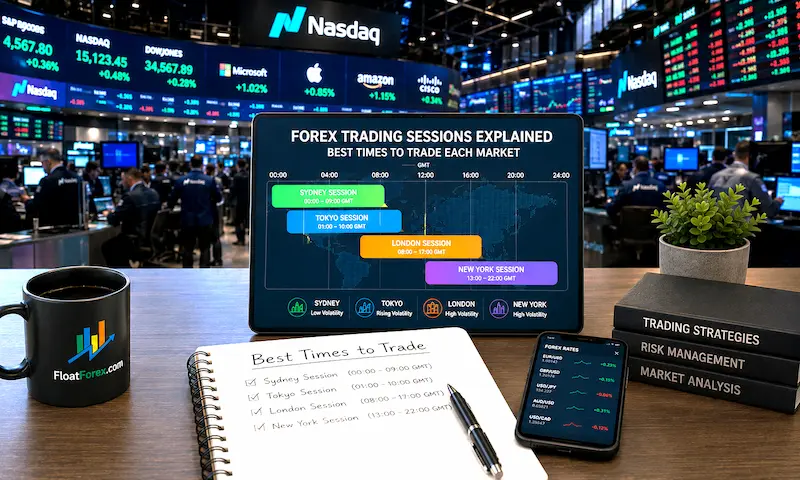
Forex Trading Sessions Explained: Best Times to Trade Each Market
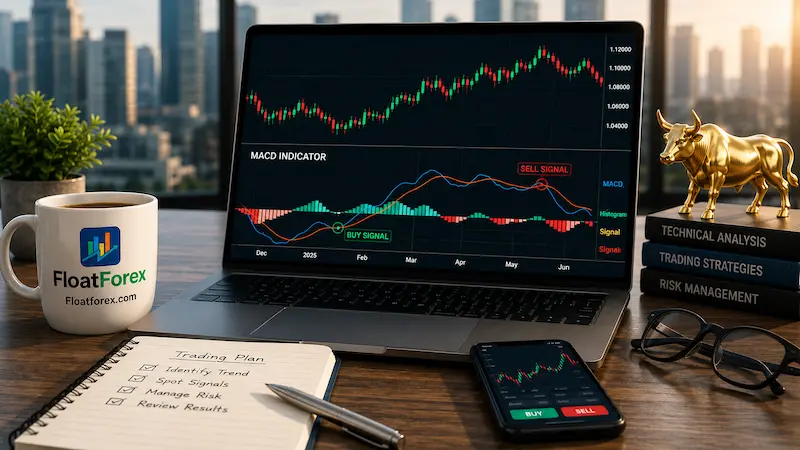
What Is the MACD Indicator and How Do You Use It to Spot Buy and Sell Signals?